
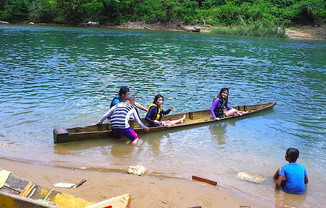
While the tourism industry is currently being measured by economic indicators – tourist arrivals and tourist receipts – we are not getting the real picture. This is the sad reality about our industry. The price that we are paying for the volume of tourists and the industry’s contribution to GNP is NOT part of the equation. We are clueless as to the crimes, pollution, cultural dilution, health issues and ecosystem damage that tourism has brought, in the name of tourist arrivals and the so called "economic prosperity" for the few. So, how do we know when the volume is enough? Do we go for unlimited increase in tourist arrivals? When do we start controlling? Or, do we even control at all?
Many LGUs have the misconception that the more tourists there are, the better. Sadly few of our industry managers are aware of the concept of “Doxey’s Irritation Index Model”. The concept simply says that tourist volume affects how local residents of a destination feel about tourism. Although destinations would have varying thresholds and tolerances, the idea is that the increase in the volume of tourists affects how the local population feels about tourists in general. The model describes 4 stages that are progressively equivalent to the increase in volume and how the people feel about the presence of tourists in their community.
1. Euphoria – This is when visitors start to trickle in and makes the local residents realize that there is something special about their place and culture. Often, locals have a different perception about themselves and their community because they see their surroundings everyday. When somebody from the outside starts talking about the place in a very positive way, this opens up their minds and makes them appreciate their resources and assets more. At this stage, the benefit is more about sense of pride instead of money.
2. Apathy – When engagement between tourists and locals becomes more formal, visitors are taken for granted and the focus is more about economic gain and personal benefit. This stage shifts the mindset of the community from “togetherness” to “each his own”. At this point the bayanihan spirit goes through a natural death.
3. Irritation - This stage may be described as booming economically, but also declining as far as environmental and social integrity. Due to increased volume of tourists and the development frenzy, social and environmental problems start to rise. Crimes become more serious and more frequent. Irresponsible behavior from tourists, as well as locals are daily occurrences. Policies may be in place, but ethics and professionalism are not the norm. When local culture is diluted, locals tend to react negatively. Even those who are directly deriving economic benefit may admit that the community is no longer how it was before tourism developed. It is at this stage that saturation is reached, but sadly managers tend to address the situation by increasing infrastructure (more hotels, better access) and increasing promotions to masked what is actually happening. They resort to “suicidal” strategies instead of limiting growth. This may herald a point of no return.
4. Antagonism - When the industry shows indications that it is chaotic and uncontrolled, locals tend to protest openly and express their displeasure and irritation over what is happening. A good example would be Barcelona, Venice and Boracay. At this point managers increase promotions or re-brand the destination, in order to offset deteriorating reputation. Despite what's going on, it is still "business as usual".
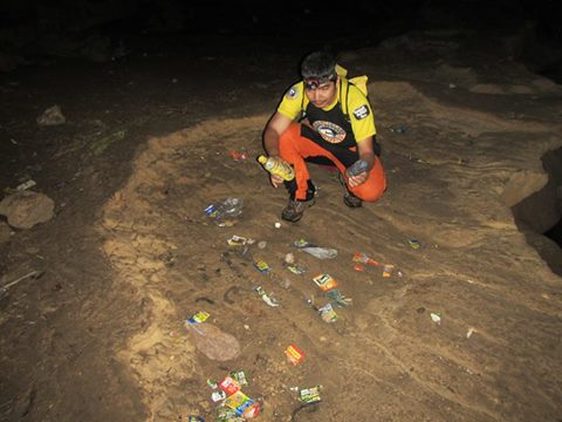
Why then do we need to know this concept? There is a point in the industry’s life cycle when it becomes very expensive, or even utterly impossible to restore what has been destroyed. A natural environment that has been damaged ,or a culture that has been diluted may not be brought back to its original state, at least not in our lifetime. It would be a shame that something that took millions of years to create (such as a natural landscape or an ecosystem) or generations to mold (such as a local culture), will be destroyed in a span of 15 to 20 years. Remember that all humans (including tourists) create an ecological footprint on a daily basis. Hence, the more people there are in a specific place, the greater the impact.
Planning responsibly is the key towards ensuring that a local tourism industry has enough safety nets to avoid the usual traps of uncontrolled development. For a beautiful country like the Philippines, there is just too much that could be lost, if tourism is simply allowed to happen and without any means of control.
Planning responsibly is the key towards ensuring that a local tourism industry has enough safety nets to avoid the usual traps of uncontrolled development. For a beautiful country like the Philippines, there is just too much that could be lost, if tourism is simply allowed to happen and without any means of control.
To learn more about tourism planning and how destinations can be created to last for many generations, follow the link: http://suievents.com/philippine-ecotourism-101

 RSS Feed
